

 Catriona Penman
Shaping the Future of Energy
 Derek Crombie : February 03, 2026
The Opportunity Shaping the Future of Energy: Geoactive's Role in a Changing World The global energy landscape is shifting rapidly. Geopolitical...
The quest for resources may change, but geological workflows don’t. What changes are the questions we're asking of it.
The skills geoscientists have developed and refined during their time in oil and gas can carry over to other subsurface work such as carbon storage, geothermal, groundwater and mineral exploration. The resource hunt and the commercial goal change, but the investigation underneath stays familiar: observe, correlate, interpret, rank uncertainty and make a decision. Our Interactive Correlations (IC) software is built around geological investigation and is not tied to a single resource.
Where is it? Why is it there? How continuous is it? What controls its distribution? And most importantly, what don't we know?
For decades, many geoscientists asked those questions specifically about hydrocarbons. Today, we are asking them about other resources. One of my favourite quotes from Carl Sagan, that I have carried with me since university is, “The absence of evidence, is not evidence of absence.” I believe this is one of those core geological concept ideas that drive the investigation and discovery regardless of the desired resource we search for.
Carbon storage needs suitable reservoirs and secure containment. Geothermal projects need heat, permeability and fluid flow. Groundwater studies need aquifer connectivity, an understanding of aquitard distribution, recharge and water quality. Mineral exploration looks for different geological controls again.
The objectives can be very different. But the underlying geological investigation often feels surprisingly familiar.
That matters because the demands on subsurface expertise are broadening. The UK is developing carbon-storage capacity, while geothermal and critical minerals are attracting increasing attention. Groundwater continues to support public supply, agriculture, industry and environmental management.
Yet experienced geoscience capability is finite. Recent UK analysis highlights demand across applied geoscience while also identifying metamorphic pressure on the existing skills base.
Perhaps we should therefore ask a different question.
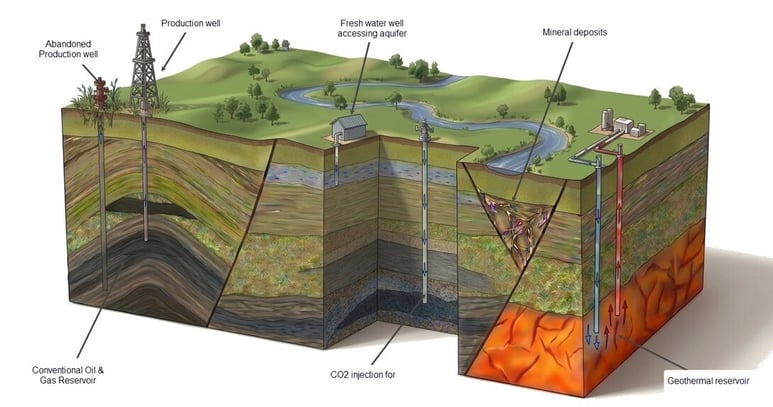
Figure 1: One subsurface, different questions.
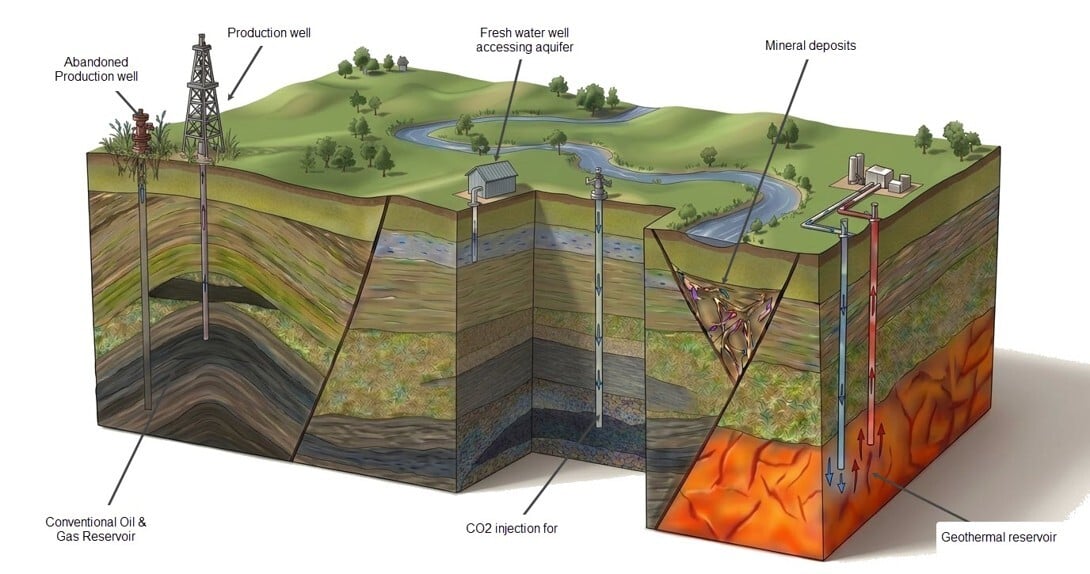
A geological cross-section showing possible hydrocarbon, groundwater, geothermal, carbon-storage and mineral applications. Each element, granted, are not necessarily so close geographically to each other but the subsurface is all connected. Each purpose of exploration is driven by the same questions: where is what I’m looking for? And how much is there? What else should I consider in the area? We are not dealing with five separate Earths, these are different objectives, but each requires us to interrogate the subsurface. We are asking different questions of the same geological system.
Different objective. Familiar investigation.
Consider a fluvial sandstone succession penetrated by several wells.
A petroleum geologist might ask whether two reservoir intervals communicate. They will examine lithology and stratigraphic position. They might correlate logs between wells. They will consider depositional environment and structure. Eventually, they must decide what happens between their control points.
Now change the question. Those sandstone bodies are aquifers.
The commercial objective has changed completely. Some data requirements and risks have changed too.
But the rocks have not received the memo. We still need to understand sandstone distribution. We still need to establish connectivity. Barriers to flow still matter. We still interpolate between incomplete control points.
Crucially, we still need to explain our uncertainty. That is the bit worth paying attention to.
This common investigation process can be expressed simply:
Industry evidence supports this transferability. The International Energy Agency identifies overlapping competencies in transferable skills, data and technology between oil and gas and geothermal. Including subsurface evaluation, modelling and drilling. [iea.org], [iea.org]. Transferable does not, however, mean identical. There is an important distinction.
There are important caveats:
These applications have different objectives; they require different specialist knowledge. They all rely on understanding the subsurface. The transferable part is more fundamental. It is our ability to interrogate incomplete geological evidence.
It's knowing which observations matter. It's recognising relationships across datasets. It's moving between different scales. It's building an interpretation from imperfect control. THEN we assess how much confidence to place in that interpretation. "We are not transferring the answer. We are transferring our ability to investigate the question."
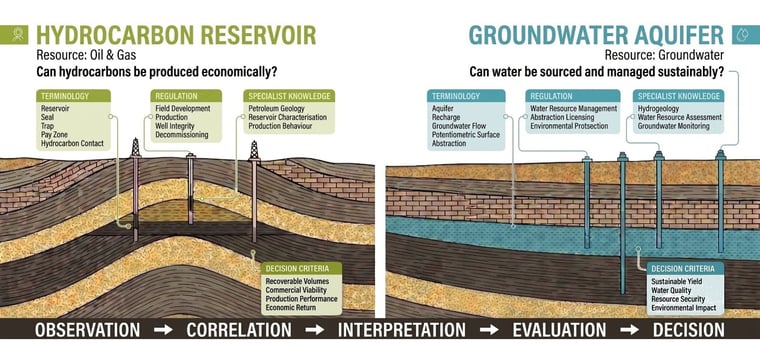
Figure 2: What changes and what transfers?
Side by side comparison of the specific “asks” for hydrocarbon reservoir vs. groundwater. Each side show the specifics (resource, terminology, regulation, knowledge and decision criteria) while along the bottom you see the same common workflow/transferrable skills: observation, correlation, spatial reasoning, data integration, interpretation decision and uncertainty.
The same principle applies to technology. A new application can be the catalyst to search for new tools. Sometimes those tools are necessary. But software should not define the geological workflow. The geological problem should.
As the Geoscience expert, start instead with five questions:
Only then can we decide how technology supports that investigation.
This matters because most subsurface organisations do not lack data. Their challenge is often retaining context between different datasets. We all agree that data needs context.
Good subsurface work is therefore not simply about seeing more data; it is about seeing the relationships within it.
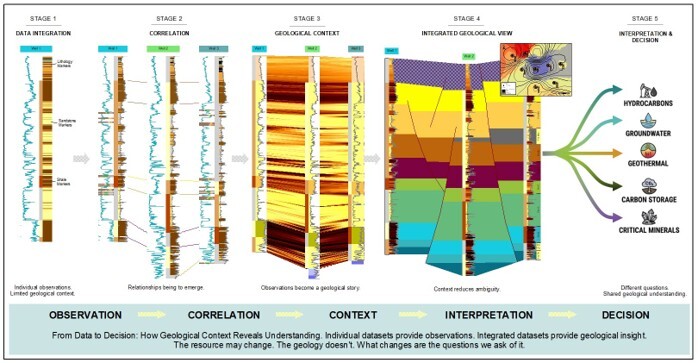
Figure 3: Data alone does not create understanding. Context creates understanding.
A progression of data being incorporated to reveal deeper understanding, from logs, lithology, stratigraphy, geochemistry, structure and spatial information. Together they combine to show an integrated geological view before leading to interpretation and decision.
That principle has shaped how Geoactive thinks about Interactive Correlations (IC). IC is Geoactive’s subsurface interpretation platform that brings well data together to help geoscientists explore geological relationships, identify patterns and build coherent understanding of the subsurface. IC has a long history within oil and gas, but its underlying purpose is not intrinsically tied to hydrocarbons (as a lot of our customers already know). It brings different forms of subsurface evidence together so geoscientists can investigate the deeper relationships.
In other words: IC is not tied to a specific resource. It is tied to the principles of geological investigation. The geology still comes first with providing a way to be curious with your data a close second.
The future of geoscience will involve different resources, technologies and terminology. What remains is the need to interpret incomplete evidence.
For individual geoscientists, that means established expertise may have wider relevance than their current job title suggests.
For organisations, it means existing capability should be examined before deciding everything must be replaced.
And for technology providers, there is a simple lesson. Do not force the geology to fit the software.
Start with the question. Then build the workflow around answering it. Because the most useful question might not be "Which industry was this designed for?" It might simply be, what geological problem are we trying to solve?
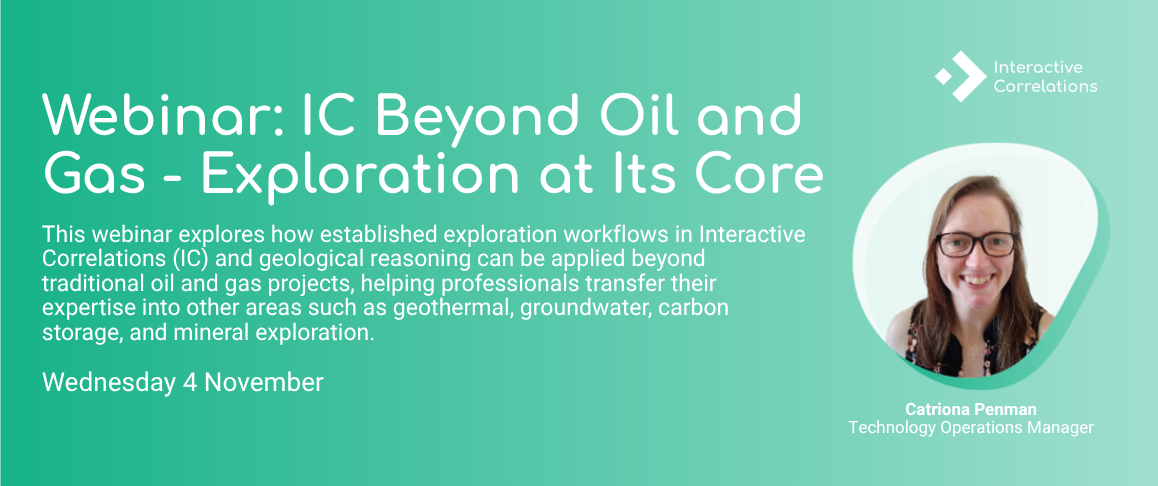
Our Beyond Oil & Gas: Exploration at its Core webinar on 4 November explores how familiar geological thinking can translate into different subsurface applications and demonstrates that thinking using Interactive Correlations. Register to see how IC helps geoscientists investigate and interpret subsurface data beyond traditional oil and gas workflows.
But perhaps the more interesting conversation starts with your own geology. Bring us your data and your geological question. Let's see what the rocks are trying to tell us. Contact me.
Suggested Reading list

Derek Crombie : February 03, 2026
The Opportunity Shaping the Future of Energy: Geoactive's Role in a Changing World The global energy landscape is shifting rapidly. Geopolitical...

 Geoactive : November 15, 2022
This year's International Geomechanics Symposium was held in Abu Dhabi last week. It was another opportunity for us to meet with our friends,...

 Catriona Penman : April 16, 2026
As decommissioning activity accelerates across the oil & gas sector, subsurface teams face growing pressure to work faster, reduce uncertainty, and...